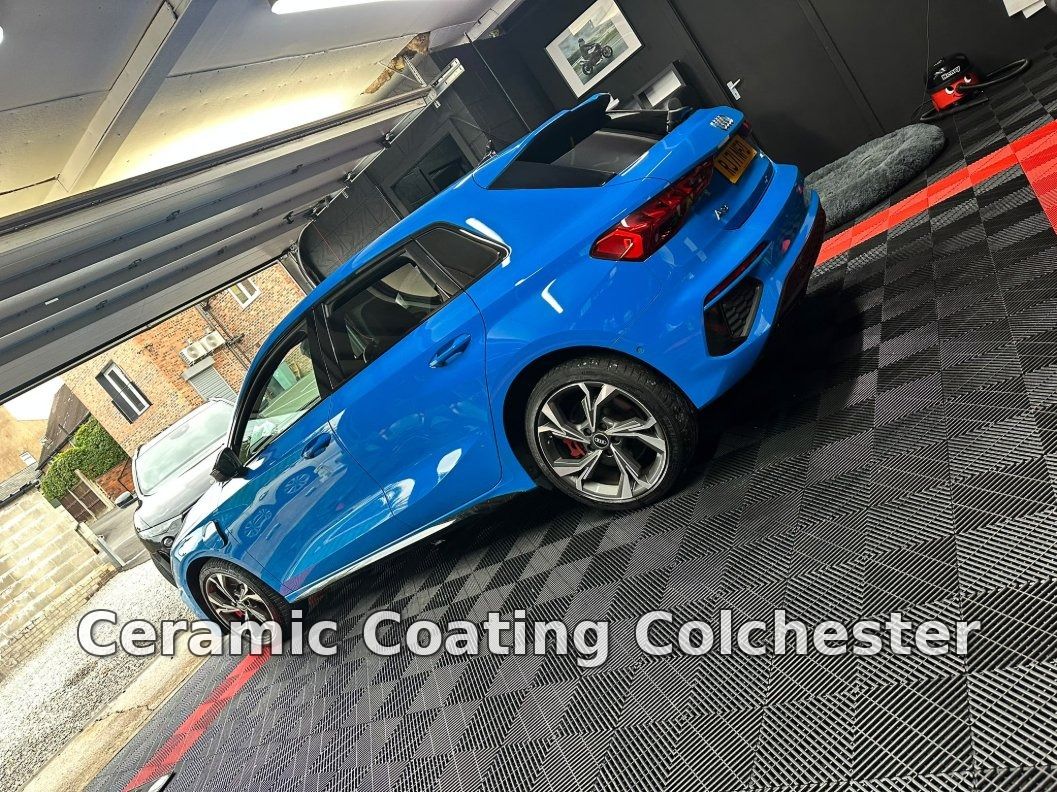
Ceramic coating myths: 9 claims, honestly answered
Ceramic coating marketing is full of claims that range from exaggerated to outright false. As installers, we'd benefit from the hype — but we'd rather you booked with clear expectations, because clear expectations are what make customers happy years later. Here are the nine claims we hear most, answered straight.
The fundamentals, without the hype, are in our ceramic coating guide.
TL;DR
- Not scratch-proof. Not maintenance-free. Doesn't stop stone chips.
- "9H" is an industry hardness-scale term, not a promise about your paint.
- A coating locks in what's underneath — it doesn't fix swirls or damage.
- The honest pitch is strong enough: gloss, easier washing, chemical resistance.
- If an installer makes the debunked claims below, choose a different installer.
Myth vs fact
| # | The claim | The honest answer |
|---|---|---|
| 1 | "Scratch-proof paint" | Myth. A coating adds minor resistance to fine marring. Keys, bushes, grit and bad washing will still mark paint. |
| 2 | "Never wash your car again" | Myth. Coated cars still get dirty. Washing is easier and safer — but it still has to happen. |
| 3 | "9H hardness means it's nearly diamond-hard" | Misleading. 9H refers to the pencil-hardness scale (ASTM D3363), a lab test for coating films. It doesn't translate to scratch or chip resistance on a car. |
| 4 | "Stops stone chips" | Myth. A micron-thin chemical layer can't absorb stone impacts. PPF exists for exactly this reason. |
| 5 | "Lasts forever / lifetime protection" | Myth. Durable, yes; permanent, no. Coatings wear gradually, and "lifetime" warranties invariably demand strict maintenance schedules. |
| 6 | "It'll hide swirls and scratches" | Myth. Coating is transparent and locks in whatever's underneath. Correction comes before coating, always. |
| 7 | "Works on any paint, no prep needed" | Myth. Bonding requires surgically clean paint. Skipping decontamination and panel wipe is how coatings fail early. |
| 8 | "Better than PPF in every way" | Myth. Different products, different jobs. Coating wins on gloss, chemical resistance and ease of washing; PPF wins on impact protection. Many owners use both. |
| 9 | "A cheap DIY bottle equals a professional job" | Myth. The product is the smallest part of a professional job. The preparation — decontamination, machine polishing, controlled application — is what you're paying for. |
The 9H question, in full
This one deserves unpacking because it's everywhere. "9H" comes from the pencil-hardness test, a standard method (ASTM D3363) where pencils of increasing hardness are drawn across a coating film to see which one marks it. It's a legitimate lab test for coating films — but it measures something very specific under very controlled conditions, and marketers have stretched it into "9H = nearly diamond hard = your paint is armour-plated".
It isn't. A coating that scores 9H on the pencil scale will still scratch if you drag grit across it, still chip when a stone hits it at 70mph, and still swirl under a dirty sponge. Hardness in the lab and durability on a car are related but very different things.
To be completely clear: we do not claim our coatings are "9H", and we'd be wary of any installer leaning on the term as a selling point. Ask what the coating actually does — gloss, chemical resistance, water behaviour, durability with proper maintenance — and judge it on that.
Why the honest version is still worth buying
Here's the thing: the real benefits don't need exaggeration. A properly applied coating genuinely transforms how a car looks and how easy it is to keep that way. Gloss deepens. Washing takes less time and less scrubbing. Bird droppings and road salt are less likely to etch the paint. Those are meaningful, everyday improvements — and unlike the myths, they actually survive contact with reality.
If a price seems built on mythical promises rather than real work, it's worth understanding what a realistic price covers before you commit.
The "lifetime warranty" myth, in full
"Lifetime ceramic coating" deserves its own section because it's the myth most likely to cost you money. Here's how it usually works: the headline promises lifetime protection, but the terms require you to return for paid inspections or maintenance top-ups on a strict schedule — sometimes annually — using only approved products. Miss a visit, wash with the wrong shampoo, or let an unapproved valeter touch the car, and the warranty is void.
That's not necessarily a scam — a maintained coating genuinely lasts far longer, and the schedule enforces the maintenance. But "lifetime" is doing a lot of marketing work for what is really "a durable coating plus a maintenance contract". Before you pay a premium for a lifetime warranty, price the required maintenance visits over the years you plan to keep the car, and ask yourself whether you'd rather have that money in your pocket and a straightforward coating without the strings.
Why these myths persist
Myths survive because they're useful — to sellers. "Scratch-proof" closes deals that "adds minor mar resistance" never would. "Never wash again" appeals to exactly the buyer who'll never maintain the coating, which is convenient because they'll never discover it underperformed. And social media rewards the spectacular: beading videos get shared, while the unglamorous truth about preparation gets scrolled past.
The antidote is boring but effective: ask installers direct questions, expect direct answers, and be suspicious of any claim that sounds too good to be true. The honest version of ceramic coating — gloss, easier washing, chemical resistance, long durability with maintenance — is genuinely compelling. It doesn't need the myths. Installers who lean on them are telling you they don't trust the real product to sell itself, which tells you everything.
Who this isn't for
If you were hoping the myths were true — a car you never wash that shrugs off keys and stones — no honest product on the market does that, and anyone selling you one is selling fiction. If you're comfortable with what a coating really is (and really isn't), you'll get exactly what you expect from it, which is the whole point of this article.
Questions, answered honestly
Is ceramic coating scratch-proof?
Is ceramic coating maintenance-free?
What does 9H mean on a ceramic coating?
Will ceramic coating stop stone chips?
Does ceramic coating last forever?
Get an exact quote for your car
No myths, no hype — just an inspection of your paintwork and a written quote for what it actually needs.
Call 07778 902278 · Request a quote