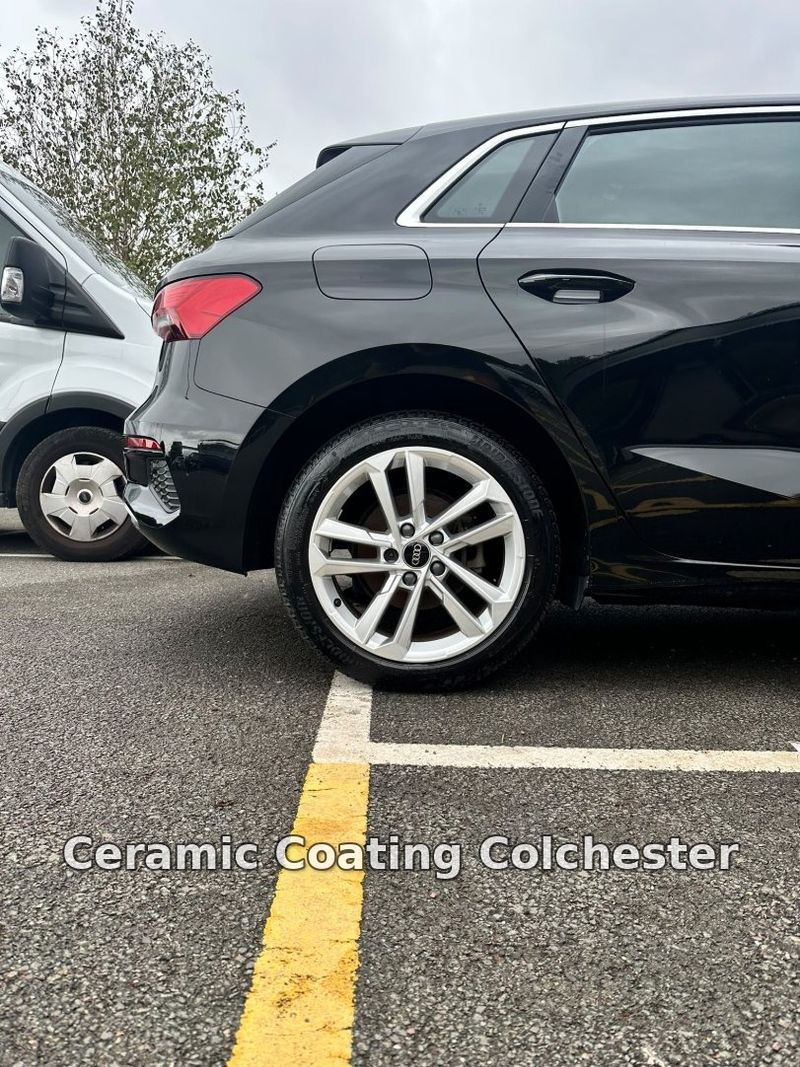
Ceramic coating for wheels and glass explained
The direct answer: wheel coating is one of the highest-value extras you can buy — brake dust is hot, metallic and corrosive, and a wheel coating lets it rinse off instead of bonding. Glass coating genuinely improves wet-weather visibility by making rain bead and blow off at speed. If you are new to the concept, read our beginner's walkthrough of what ceramic coating actually is first.
TL;DR
- Wheels: high value — brake dust releases instead of bonding; the proper job includes removing the wheels.
- Glass: real rain-visibility benefit; side and rear glass last well, the windscreen needs periodic reapplication.
- Trim: gloss black trim benefits; faded grey trim needs restoration first, not coating.
- None of these replaces maintenance — coated surfaces still need washing, just far less effort.
Why is wheel coating worth the money?
Wheels take more cosmetic punishment than any other part of the car. Every time you brake, fine iron particles shed from the pads land on the wheel hot and oxidise in place. Left alone — especially through a wet British winter — brake dust bonds to the surface and can etch it permanently, dulling the finish or creeping under the lacquer on diamond-cut wheels.
A dedicated wheel coating — formulated to survive brake heat — creates a slick, chemically resistant layer that brake dust cannot bond to. Instead of scrubbing with harsh wheel cleaners every few weeks, you rinse with a pressure washer and most of the dust falls off; the rest comes away with normal shampoo.
The value is highest on intricate or dark wheels, where dust is hardest to remove and most visible — and heading into winter, when road salt joins the dust and sits on the wheels for weeks. If you are already having paintwork coated, wheels are the most defensible extra, which is why our wheel, glass and trim coating service treats them as a core part of a complete package.
One honest caveat: coating will not fix wheels that are already damaged — heavily kerbed or corroded wheels need refurbishment first, because coating seals in whatever condition it finds.
Do wheels need to come off for coating?
This is the question to ask before you compare quotes, because it is where most of the price difference lives. The visible face of the wheel can be coated with the wheels on the car. But the face is not where most brake dust accumulates — the barrel (the inner part of the wheel, hidden behind the spokes) collects the bulk of it, and you cannot reach the barrel properly with the wheel fitted.
A proper job means the wheels come off, are cleaned inside and out, decontaminated, and coated on faces and barrels. Calipers can be cleaned and coated at the same time where they show through the spokes.
Faces-only coating is a compromise, not a scam: cheaper, and it still helps the visible part of the wheel. But if one quote is dramatically cheaper than another, check whether you are comparing a full job against a half job. Ask when you book specialist wheel coating and we will tell you exactly what is included.
Does glass coating really work in rain?
Yes — and of all the extras, this is the one you feel most immediately. A hydrophobic glass coating makes rain bead into tight droplets that airflow blows off at speed. On a motorway in heavy rain the difference is genuinely noticeable: the windscreen stays clearer with less wiper use, and side windows clear themselves.
Honest boundaries: it is not a substitute for good wiper blades, it does not make heavy rain effortless, and like every coating it will wear and eventually need reapplication.
How long does glass coating last on a windscreen?
Less long than on the rest of the car — and anyone who tells you otherwise is selling, not advising. The windscreen is the one coated surface that gets mechanically abraded every time it rains, because the wiper blades drag across it. Side and rear glass, which see little or no wiper action, hold their coating far longer.
Plan on periodic reapplication or a maintenance top-up for the windscreen — how often depends on mileage, wiper use and the product, so ask your installer for a realistic interval. The rest of the glass will typically outlast the windscreen by a wide margin.
Should I bother coating trim?
It depends on the trim. Gloss black trim — pillars, grilles, mirror caps — shows every swirl and fingerprint and marks easily in washing. A trim-appropriate coating helps it stay presentable and makes it far easier to clean without marking.
Unpainted grey plastic is a different story: if it has faded, coating will not bring the colour back — it seals in the faded look. Faded trim needs restoration first, then protection. And note the coating used on paintwork is not always the right product for plastics, so ask what is applied to each surface.
Durability comparison: wheels vs glass vs trim
| Surface | Relative durability | What wears it |
|---|---|---|
| Wheels (faces and barrels) | Long | High-temp formulation resists brake heat; survives normal washing |
| Side and rear glass | Long | Minimal abrasion once applied |
| Windscreen | Shorter | Wiper abrasion; plan periodic reapplication |
| Gloss black trim | Long | Needs careful prep — existing swirls show through |
| Faded grey plastic trim | Not applicable | Restore first, then protect — coating alone fixes nothing |
These are relative directions, not promises — actual durability depends on the product, your mileage and how the car is washed. Anyone quoting exact year-figures without knowing how you use the car is guessing.
Who this isn't for
Wheel and glass coating is not for everyone:
- If you never wash the car, coating will not save you — contamination left for months degrades even the best coating. Coating makes washing quicker and easier, not optional; see our maintenance schedule.
- If the wheels are already badly damaged, refurbish first — coating over corrosion or flaking lacquer is a waste.
- Track-day cars burn through wheel coating faster — extreme repeated brake heat shortens its life. It still helps, but set expectations accordingly.
- If you are returning a lease soon, the maths rarely works. Coating pays back over years of ownership, not months.
- Automatic car washes chew through glass and trim coatings with harsh chemicals and brushes. If your routine is the petrol-station brush, read our piece on automatic car washes and ceramic coating first.
Getting it done properly
Before you book anywhere, ask four questions: are the wheels removed or is it faces-only? Is the windscreen included, and what is the realistic reapplication interval? Are different products used on trim, glass and wheels? And how do these extras interact with the paint coating warranty? The answers quickly reveal whether you are dealing with someone who understands the surfaces.
Questions, answered honestly
Is wheel ceramic coating worth it?
Does glass coating really work in rain?
Can wheels be coated without removing them?
Is trim worth ceramic coating?
Get an honest answer for your car
If your wheels are a pain to clean, your wet-weather visibility could be better, or your gloss black trim is already swirling, call 07778 902278 or use the quote form. We offer wheel, glass and trim coating in Colchester standalone or alongside paintwork — and if it is not right for your car, we will tell you that too.