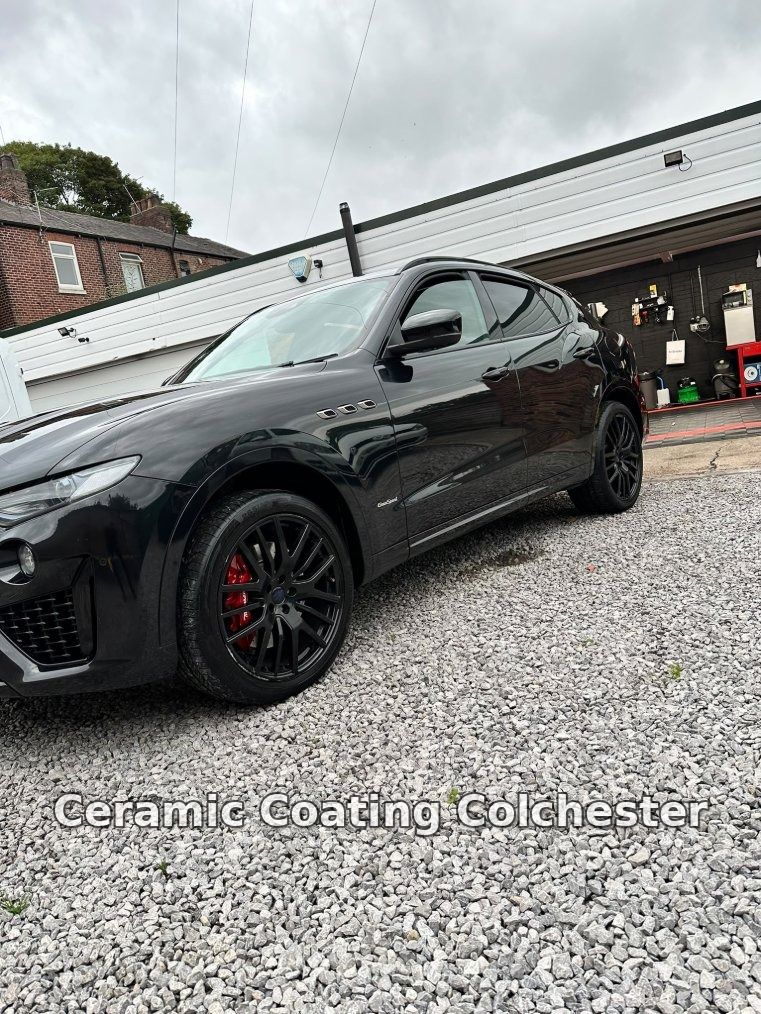
Ceramic coating for black cars: the special care guide
Black cars gain more from ceramic coating than any other colour — black shows every swirl and water spot, and a quality coating makes washing far safer and easier. But black also exposes every shortcut: machine polishing beforehand is near-mandatory, and disciplined washing keeps the finish flawless. Start with our complete walkthrough of what ceramic coating does and doesn't do.
TL;DR
- Black shows swirls, haze, and water spots more than any other colour — there is nowhere to hide.
- Machine polishing before coating is effectively non-negotiable on black.
- Corrected, coated black paint has the deepest finish possible — the payoff is real.
- Washing discipline matters more than product choice afterwards.
- Coating is not scratch-proof and will not fix neglect; maintenance still counts.
Why does black paint show every imperfection?
Black paint is a mirror. Dark, highly reflective surfaces contrast with every fine scratch, hologram, and mineral deposit, while lighter colours scatter light and hide the same defects. A white car and a black car can carry identical swirl marks — you will only ever notice them on the black one.
The usual culprits are wash swirls: fine circular scratches inflicted by grit trapped in wash mitts, automatic brush washes, or dry-wiping dust off the panels. On black, each one catches the light against the dark background. Holograms — buffer trails left by careless machine polishing — also show most clearly on black. Water spots are mineral deposits left behind when droplets dry on the surface; on black they read as pale rings, and if left baking in the sun they can etch into the clear coat. Black paint absorbs more heat than any other colour, which can bake contamination on faster on hot days. Then there is the psychological factor: a black car can look dusty within hours of washing, because light-coloured dust contrasts so sharply with it. None of this means black is a bad choice — it means black is an honest one. It shows you exactly what is happening to your paint, for better and worse.
Does ceramic coating hide swirls on black paint?
No — it does the opposite, and this is the single most common misunderstanding we hear from black-car owners. Ceramic coating is optically clear and slightly gloss-enhancing, so it amplifies whatever sits underneath it, defects included. Coating over uncorrected black paint seals the swirls in precisely where they are most visible.
A coating adds a hard, glossy sacrificial layer, but it does not fill, level, or disguise scratches the way a glaze or a heavy wax might temporarily. If your black car has wash swirls now, it will have them after coating — except now they sit locked under a layer designed to last years, and removing them later means removing the coating first. This is why a proper installer inspects black paint under strong inspection lighting before quoting: defects that vanish in a shaded driveway become obvious under the lights. If someone offers to coat your black car without discussing correction, treat that as a red flag, not a bargain.
How much correction does a black car need before coating?
Assume it needs at least a proper machine-polish enhancement, and quite possibly a multi-stage correction. Nearly every used black car carries wash swirls, and even many nearly-new ones carry dealer-installed defects from pre-delivery washes and wipedowns.
The honest sequence is: thorough decontamination wash, iron and tar removal, clay treatment where needed, then machine polishing, then a panel-wipe to strip polishing oils, then coating in a controlled environment. On black, correction is not optional garnish — it is the foundation the whole job stands on, which is why our dedicated paint correction service in Colchester treats this stage as the heart of the work rather than a bolt-on. One caution matters especially for black: chasing a literally perfect finish can mean removing more clear coat than is wise. Paint is thinnest on edges and high spots, and a good detailer will tell you where "excellent" stops and "unsafe" begins. Depth comes from clarity, not from chasing the last two percent at the expense of the paint itself.
What is the right washing routine for a coated black car?
The coating makes washing easier, but black paint still demands the full safe-wash routine every time: thorough pre-rinse, snow foam dwell, two-bucket contact wash with clean mitts, straight-line motions, and careful drying. Skipping steps is how swirls come back.
Work through it in order. Pre-rinse thoroughly to loosen grit before anything touches the paint — never wipe or touch dusty paint. Apply snow foam and let it dwell so it lifts the bonded film of road grime, leaving your mitt with less to do. Use the two-bucket method: one bucket for shampoo, one for rinsing the mitt, with clean water in both. Choose clean, plush wash mitts, and reach for a second one if the car is very dirty. Use straight-line motions with minimal pressure — circles are how swirls are born. Dry properly with plush microfibre drying towels or forced air; never let the car air-dry in the sun and never reach for a chamois or an old bath towel. Remove bird droppings and tree sap promptly with a damp microfibre — they etch faster on hot black paint. And keep your wash media hygienic: dirty mitts and towels are the number one cause of new swirls. Wash them after every use and retire worn ones without sentiment.
How do you stop water spots on black paint in hard-water areas?
Dry the car completely and promptly after every wash, work in shade, and never let tap water bake on the panels in the sun. Much of Essex has moderately hard water, so this matters more here than in soft-water regions.
Water spots are the arch-enemy of black paint because mineral rings are so visible against it. The fix is process, not product: wash out of direct sun — early morning or evening — rinse panel by panel if needed, and dry immediately, ideally with forced air followed by a drying towel, so water never sits long enough to leave deposits. If spots do form, remove them quickly; left in heat, minerals can etch through into the coating and clear coat, at which point removal may need machine polishing. A coating genuinely helps — contamination releases more easily from a coated surface — but it does not make the car immune to hard water.
Do and don't: black-car ownership after coating
| Do | Don't |
|---|---|
| Insist on machine polishing before coating | Coat over swirled paint to "save money" |
| Inspect the finish under inspection lighting | Judge the paint in a shaded driveway |
| Wash with the full safe-wash routine | Use brush washes, sponges, or dry-wiping |
| Dry fully and promptly after washing | Let hard water air-dry in the sun |
| Keep wash mitts and towels scrupulously clean | Keep using worn-out wash media |
| Remove bird droppings and sap promptly | Assume the coating makes the car maintenance-free |
Who this isn't for
Be honest with yourself before spending on coating a black car. If meticulous washing sounds like a burden you will not sustain, black paint will punish you — coated or not. A coating reduces the effort and the risk, but it does not eliminate either, and it is not scratch-proof: it resists chemical etching and light marring, but stone chips, key scratches, and careless washing will still mark the paint. If your black car already carries heavy defects and you are unwilling to pay for the correction stage, coating now would seal those defects in at their most visible — better to wait and do it properly. And if the car lives outdoors under trees with no realistic washing routine, manage expectations: the coating helps enormously, but the environment still wins without maintenance.
Related reading
- Paint correction before ceramic coating
- How to wash a ceramic coated car
- Does ceramic coating stop scratches?
Questions, answered honestly
Is ceramic coating worth it on a black car?
Does ceramic coating hide swirls on black paint?
How do I keep a coated black car swirl-free?
Will ceramic coating stop my black car getting dusty?
Get an honest answer for your car
Black paint rewards proper preparation and punishes shortcuts. If you want to know what your car actually needs, request a quote or call 07778 902278 — we will look at the paint properly and tell you honestly whether coating is the right next step, including when it isn't.