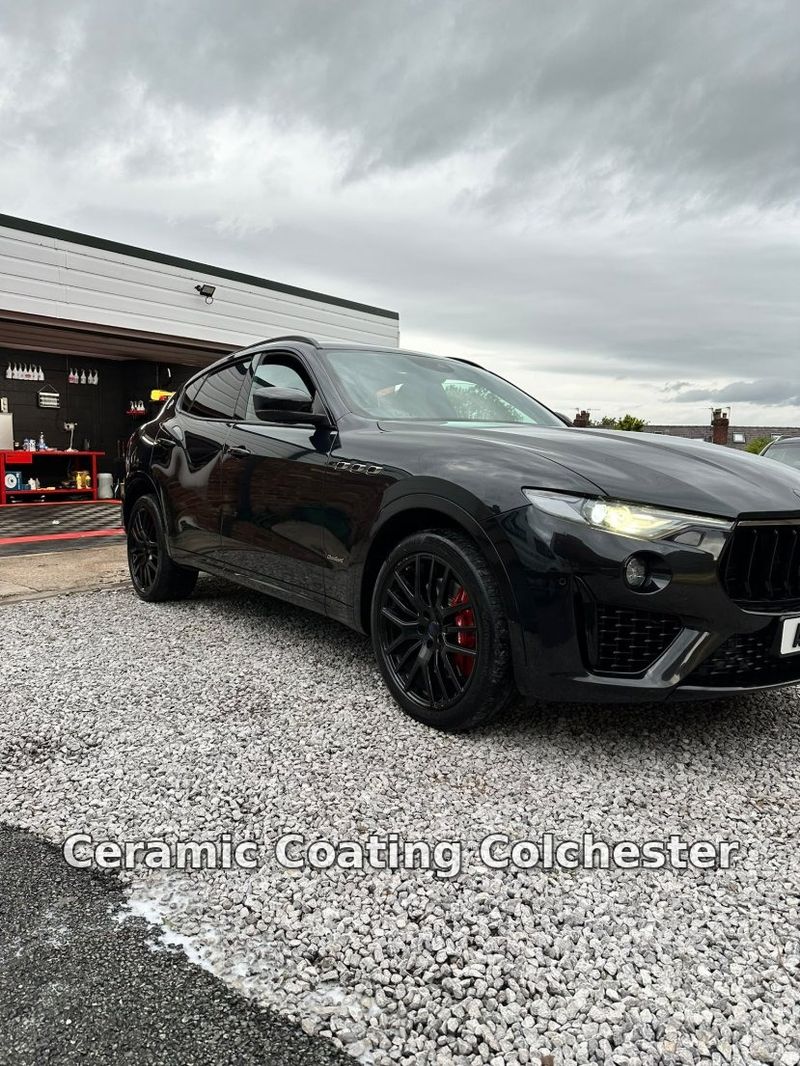
Does ceramic coating stop scratches? The honest answer
No. Ceramic coating does not stop scratches. It adds a hard, slick layer over your clear coat that resists light marring better than bare paint — but keys, grit, bushes, and stone chips will still mark it. If you want the full picture of what coating does and does not do, start with our ceramic coating guide.
TL;DR
- Ceramic coating resists light marring (faint wash marks, fine swirls) better than bare clear coat.
- It does not prevent scratches from keys, grit, car-park encounters, or stone chips.
- It hides nothing — existing scratches must be polished out first.
- For real impact protection, you want paint protection film, not coating.
What "scratch resistance" actually means for coatings
Clear coat is relatively soft. A ceramic coating cures into a harder, slicker surface on top of it. In practice, this means the light, shallow marring that comes from careful washing — the faint haze that builds up over years — develops more slowly on coated paint. That is a genuine, observable benefit.
What it does not mean: resistance to anything with real force behind it. A fingernail dragged across the panel, a bramble on a country lane, grit flicked up on the A12, a shopping trolley in a Colchester car park — all of these will still scratch coated paint, because they would scratch the clear coat and the coating is only microns thick.
The marketing vs the reality
| Claim you may see | The honest version |
|---|---|
| "Scratch-proof" / "scratch-resistant coating" | Resists light marring only; not scratch-proof |
| "9H hardness — harder than steel" | Hardness ratings are marketing shorthand, not a promise your paint is invulnerable |
| "Never get swirls again" | Fewer swirls with good technique; bad technique still swirls it |
| "Protects against stone chips" | No — stone chips need paint protection film |
| "Self-healing" | Some coatings recover from very light marring with heat; this is not PPF-level self-healing |
What light-marring resistance looks like in practice
To be fair to the product, the scratch resistance ceramic coating does offer is genuinely useful — it is just narrow. On bare clear coat, careful hand washing still installs faint micro-marring over the years; it is essentially unavoidable, because any contact with paint carries some risk. On coated paint, the harder, slicker surface means that same careful washing installs visibly less marring over the same period.
In practice, owners notice this as paint that "stays fresher for longer" — the car does not develop that tired, hazy look in direct sunlight as quickly. It is a slowing of the inevitable, not a prevention of it. Combined with the coating's chemical resistance and washing ease, it is a meaningful benefit for anyone who washes their car properly. It is simply not armour, and it was never sold honestly as such by reputable installers.
Why the confusion persists
The confusion is understandable: "hard coating" sounds like armour. But hardness and impact resistance are different properties — glass is hard and still shatters. A ceramic coating is a thin, hard, chemical-resistant layer. It excels at chemical resistance (bird droppings, road salt, UV) and at making washing easier and safer. Scratch prevention was never its job.
What to do if scratches are your main worry
If your priority is keeping paint free of chips and scratches — a new car you plan to keep, a dark colour that shows everything, lots of motorway miles — ask about paint protection film in Colchester. PPF is a thick urethane film, genuinely self-healing for light marks, and the only realistic defence against stone chips. Many owners combine the two: PPF on the front end and high-impact zones, ceramic coating over the whole car for gloss and washing ease.
Who this isn't for
Ceramic coating alone is not for the owner whose main fear is car-park scratches and stone chips on a motorway commute. You would be paying for the wrong product. Talk to an installer about film, or at minimum a coating-plus-film combination, and get advice matched to the actual risk.
Related reading: ceramic coating vs paint protection film, paint correction before ceramic coating, ceramic coating myths.
Questions, answered honestly
Does ceramic coating make paint scratch-proof?
What actually protects against scratches and stone chips?
Will ceramic coating hide existing scratches?
Does ceramic coating reduce swirl marks from washing?
Get an honest answer for your car
The right choice depends on your car's paint condition, how you use it, and what you expect protection to do. Call 07778 902278 or use the quote form — if ceramic coating isn't right for your car, we'll tell you that too.