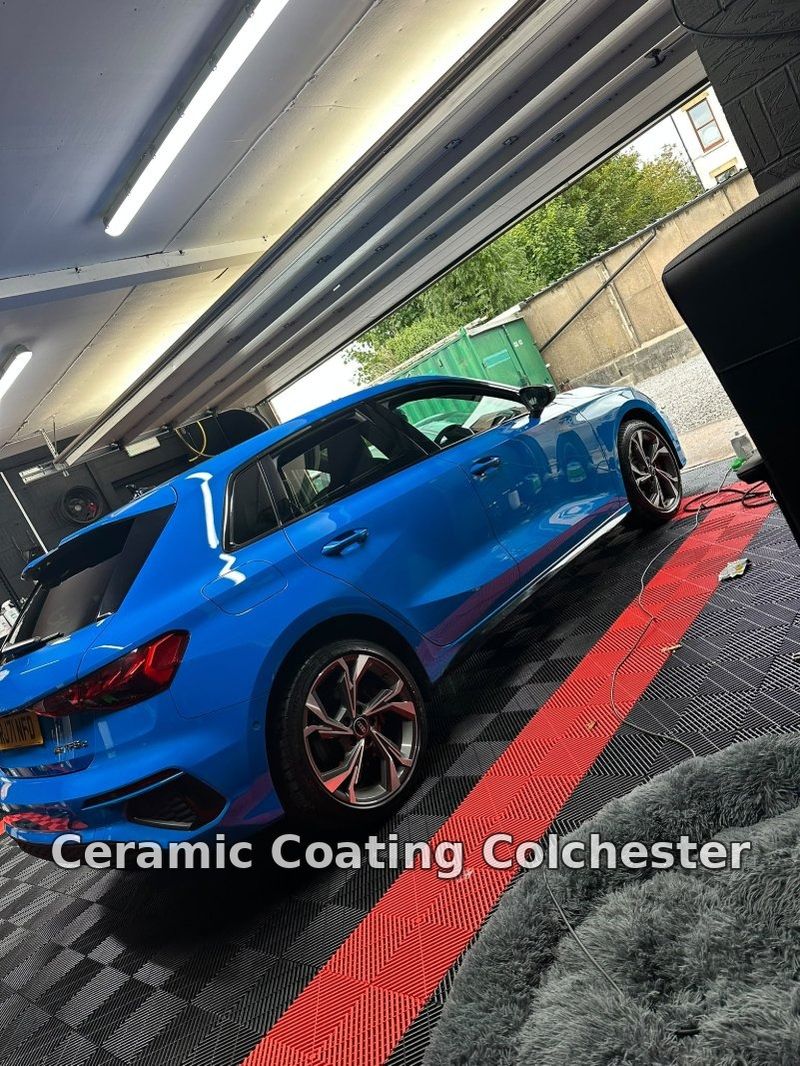
Ceramic coating for electric cars: the EV guide
The honest answer is that coating an electric car is the same job as coating any car — EV paint is car paint, and the chemistry doesn't care what's under the bonnet. What does differ is how EVs tend to be used: higher mileage, long waits at exposed rapid chargers, and trim-heavy designs. Our essential primer on how ceramic coating actually works covers the fundamentals this article builds on.
TL;DR
- Same paint, same coating, same process — the drivetrain changes nothing about the chemistry.
- Instant torque and acceleration are irrelevant to coating; ignore any marketing that says otherwise.
- High-mileage EVs benefit strongly — easier washing between long trips.
- Mask charging ports, seals, and electrical contacts — coat paint only.
- Consider PPF on the front end for motorway-heavy use.
- Mobile appointments can work neatly around home charging.
Is ceramic coating actually different for electric cars?
No. This deserves stating plainly because EV-specific marketing has muddied the waters: there is no special "EV ceramic coating," and any installer claiming your electric car needs a fundamentally different product is selling you something. The paint on a Tesla, a Leaf, or an electric Corsa is automotive paint applied in a factory like any other, prepared and coated with the same decontamination, correction, and application process.
What some marketing dresses up as EV-specific needs is really just modern-car design: flush door handles, gloss black trim, large glass areas, and camera housings appear on plenty of petrol and diesel cars too. The one genuinely EV-specific consideration is the charging port area, and even that is straightforward — painted surfaces around the charge flap get coated like any paintwork, while contacts, seals, and the port interior are masked off. Similarly, instant torque and blistering acceleration have precisely nothing to do with paint protection; they affect your tyres, not your clear coat. When an installer talks honestly about EVs, they talk about your usage pattern, not your powertrain.
What is genuinely different about coating an EV?
Use patterns, not chemistry. Many EVs cover high annual mileage, because cheap home charging makes long-distance driving economical. High mileage means more road film, more insect residue in summer, more stone chips, and more frequent washing — all of which a coating makes easier and safer to deal with.
Charging stops add their own wrinkle. Rapid chargers are often in exposed locations — motorway service areas, retail park corners — where the car sits for twenty to forty minutes in dust, rain, or sun while you wait. A coated car shrugs off that kind of exposure far better than an uncoated one, and washes down quicker when you get home. EVs also tend toward trim-heavy styling: gloss black pillars, large glass roofs, flush handles, and extensive plastic cladding. These surfaces benefit from protection too — gloss black trim in particular shows scratches readily — so a thorough job covers more than just the painted panels. One small genuine win: regenerative braking means far less brake dust on the wheels, so coated wheels stay cleaner for longer on an EV than on an equivalent petrol car.
Which areas need special care on an electric car?
| Area | Approach |
|---|---|
| Painted panels | Coat exactly as on any car |
| Charge flap (painted) | Coat the painted surfaces normally |
| Charging port interior | Mask off — no coating on contacts or seals |
| Sensors and camera housings | Mask or avoid — never coat over a lens |
| Gloss black trim | Protect with a trim-appropriate treatment |
| Glass roof and large glass areas | Glass treatment if available |
| Wheels | Coat — less brake dust, but road film still accumulates |
| Frunk and boot shuts | Coat painted edges; they see frequent handling |
The guiding principle is simple: coating goes on paint and suitable trim, never on electrics, optics, or seals. A careful installer masks the charge port, sensors, and camera housings as a matter of routine — if yours doesn't mention masking, ask.
Do high-mileage EVs benefit more from coating?
Yes — this is where the honest case for coating an EV is strongest. An EV covering serious annual mileage accumulates contamination at a relentless pace: motorway film, winter road salt, summer insects, and brake-dust-free but still grimy wheels. That means frequent washing, and frequent washing is where swirl marks are born.
A coating breaks that cycle in two ways. First, contamination bonds less strongly to a coated surface, so each wash is quicker and needs less aggressive contact. Second, the slicker surface means less pressure and fewer passes with the wash mitt — and every pass you don't make is a swirl you don't inflict. For a car washed weekly or fortnightly through winter, that compounds into visibly better paint after a year or two. The stone-chip question is separate and unchanged by the powertrain: motorway miles mean chips, and coating does not prevent them. If your EV lives on the motorway, it is worth discussing paint protection film for the front end alongside the coating — film absorbs impacts that no coating can.
Can the coating be done while the car charges at home?
Often, yes — and this is one of the genuinely practical EV advantages. Because the car sits on the driveway charging anyway, a mobile appointment can work around your routine rather than disrupting it: the car stays put, plugged in, while the work happens around it. Our mobile ceramic coating service across Colchester and parts of Essex is built for exactly this — the controlled parts of the process (decontamination, correction, application) happen at your home, and the car simply cures where it stands.
One honest caveat: coating still needs suitable conditions. Heavy rain, high winds blowing dust, or freezing temperatures can rule a mobile day out, and the car needs to stay dry and untouched during the initial cure. Your installer should be upfront about weather calls rather than pushing ahead regardless — a postponed appointment beats a compromised coating.
Marketing claims vs reality: an EV checklist
| Claim you'll hear | The reality |
|---|---|
| "EVs need a special ceramic coating" | False — same paint, same coating, same process |
| "Instant torque demands stronger protection" | Nonsense — torque affects tyres, not clear coat |
| "Coating improves EV range or efficiency" | No credible mechanism — ignore it |
| "High mileage means coating wears out faster" | Coating durability is about exposure and maintenance, not odometer readings |
| "You can't coat near the charging port" | You can — painted areas are coated, electrics are masked |
| "EV glass roofs can't be treated" | They can, with glass-appropriate treatments |
Who this isn't for
If your EV is a low-mileage second car that lives in a garage and gets washed monthly, a coating is a luxury rather than a workhorse investment — be honest about whether the outlay matches the use. If stone chips are your main worry and motorway miles dominate, coating alone will disappoint you; film on the front end is the honest answer there. And if you're expecting the coating to change anything about charging, range, or efficiency, reset those expectations now: it protects paint, and it does that job well, but it has nothing to say to the battery.
Related reading
- Ceramic coating vs paint protection film
- Ceramic coating maintenance schedule
- How to wash a ceramic coated car
Questions, answered honestly
Is ceramic coating different for electric cars?
Can you ceramic coat the charging port area?
Do EVs need paint protection film instead?
Does ceramic coating affect EV sensors or cameras?
Get an honest answer for your car
EV or not, the right question is always about your paint, your mileage, and your routine — not your drivetrain. Request a quote or call 07778 902278 and we'll give you a straight answer on what your electric car actually needs.