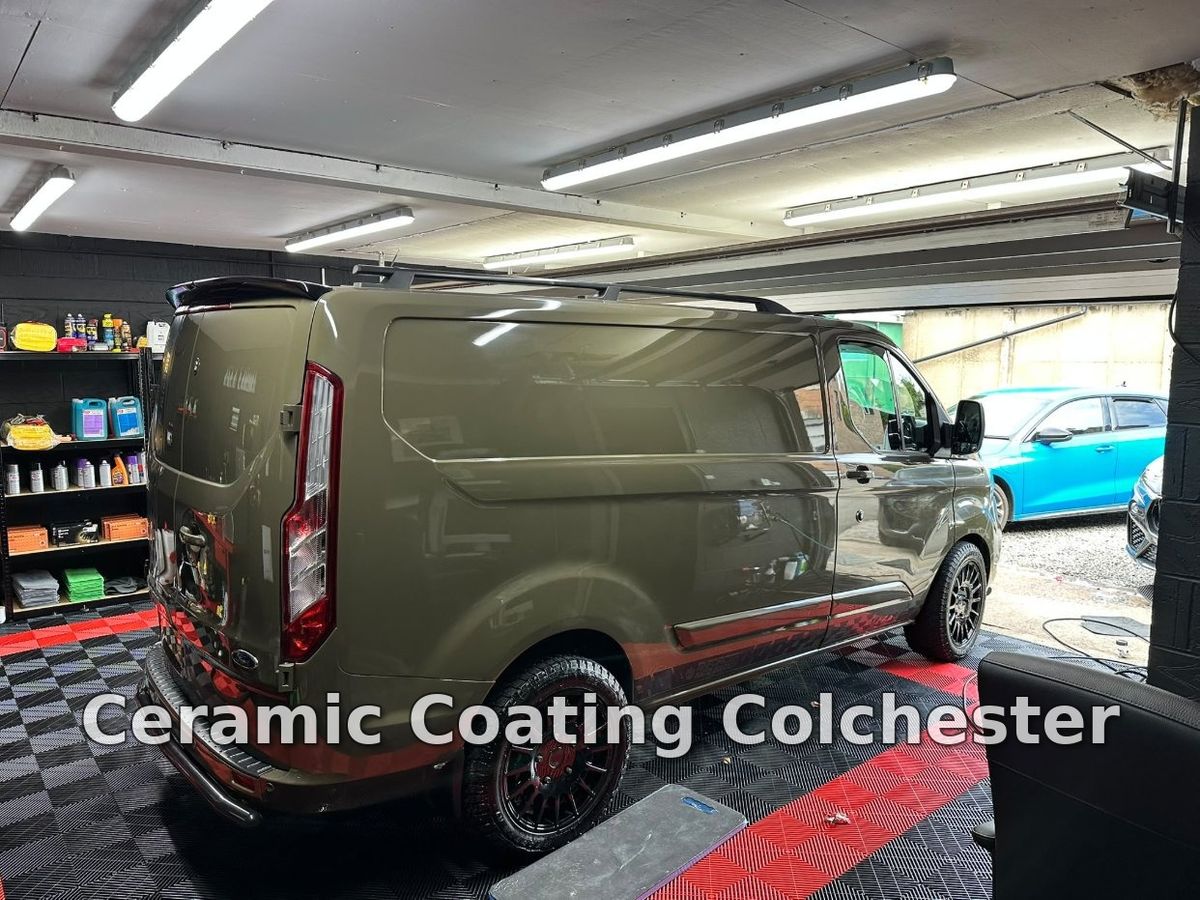
Ceramic coating van
Ceramic coating for vans and SUVs
Bigger vehicles face the same paint threats as cars — road salt, UV, bird droppings, industrial fallout — spread across a lot more surface area. The coating chemistry is identical; the logistics are not. We coat vans and large SUVs in Colchester, and this page explains what changes with size, what it costs in principle, and when it is honestly not worth doing.
What's included
A van or SUV coating is the same protection package as a car, scaled up: full decontamination, machine polishing preparation where needed, and ceramic coating applied to the paintwork. The extras that matter most on larger vehicles are the same ones that matter on cars — wheel coating for brake dust, and glass coating for rain visibility — and they can be added to any booking.
What genuinely changes with size:
- More surface area means more decontamination, more polishing, more product and more time. Size-based pricing exists for exactly this reason — a large van is simply more work than a supermini, and the quote reflects that honestly.
- Working height. Roofs and high panels need proper access equipment for safe, even application. This is planned into the job, not improvised on the day.
- Mixed materials. Vans combine painted panels, unpainted plastics, and sometimes signwriting or livery. Each needs the right approach — vinyl and paint are different surfaces and are treated as such.
- Studio fit. Not every large van fits every studio. Tell us the make, model and roof height when you enquire so we can confirm before you book, not after you arrive.
For the fundamentals of what the coating itself does, see our ceramic coating guide.
How the process works
The process follows the same stages as a car coating, with the timetable stretched to fit the vehicle. It starts with a thorough wash and decontamination — vans that have done real work usually carry heavy fallout, tar and traffic film, and all of it has to come off before any coating goes on. Then comes inspection and machine polishing preparation: high-mileage work vehicles often need more correction than a pampered car, and we will show you what the paint actually needs rather than selling a fixed package.
Coating is then applied panel by panel, working systematically around the vehicle including the roof — the panel most often rushed on tall vehicles, and the one most exposed to UV and bird droppings. Wheels, glass and trim extras are done alongside if booked. The vehicle then needs its curing period before it goes back to work, which is worth planning around if the van earns its keep daily.
The work can be done at our Hythe Quay studio in Colchester or via our mobile service across Colchester and parts of Essex. For vans, the studio is usually the better option — controlled lighting, proper access equipment and no weather risk — but ask and we will advise on what suits your vehicle.
Vans: the honest assessment
| Use case | Coating verdict |
|---|---|
| Signwritten or livery van, customer-facing | Worth it — the van is advertising; easier washing and preserved appearance pay back |
| Crew van, mixed use | Worth considering — protects resale value and keeps it presentable |
| Camper conversion, cherished | Worth it — high value and emotional investment deserve protection |
| Site van, heavy-duty work | Probably overkill — a simpler sealant regime is more rational for a vehicle that lives on building sites |
The pattern is simple: the more the vehicle's appearance matters — to customers, to resale value, or to you — the stronger the case. A van that represents your business arriving clean and glossy is worth something real. A van that gets pressure-washed on site once a quarter will not see the benefit.
SUVs
Large SUVs coat like large cars: the same process, scaled up. Family SUVs doing school runs, tip trips and holidays collect exactly the contamination coating is designed to defeat, and the washing ease is as valuable as on any car. Seven-seat size means a longer working day and size-based pricing — not a different technique, and not a compromise on the result.
Fleet and trade enquiries
If you run more than one vehicle, talk to us. Multi-vehicle bookings can be scheduled sensibly — for example, around your quieter days — and quoted as a package rather than a stack of individual jobs. Signwritten and livery vehicles are assessed individually: tell us about the livery when you enquire so the approach and the quote are accurate from the start. We will also tell you honestly if coating is the wrong call for a particular vehicle in your fleet — a site van and a customer-facing van should not necessarily get the same treatment.
Honest limits and trade-offs
- Coating is not armour. It resists chemicals and makes cleaning easier; it does not stop stone chips, scratches from site work, or damage from loading. A working van will still pick up marks — they will just be easier to deal with.
- It needs washing. Contamination left for months degrades any coating. The benefit is that washing a coated van takes far less time and effort — which matters more on a large vehicle than a small one.
- Preparation is most of the job. On high-mileage vans, machine polishing preparation is where the real time goes. Anyone quoting a van coating without seeing the vehicle — or without asking about its condition — is guessing.
- Curing time needs planning. A van that earns money daily needs its downtime scheduled. We will be upfront about how long the vehicle is with us.
Who this isn't for
- Site vans that live on building sites. A sealant regime is cheaper and more rational; save the coating budget for the vehicles that represent the business.
- Vehicles you are selling imminently. Coating pays back over years, not weeks.
- Vans with badly damaged paint. Sort the bodywork first — coating seals in whatever condition the paint is in.
Pricing
Size-based pricing applies: larger vehicles mean more preparation, more product and more time, and quotes reflect that. We do not publish fixed figures because every vehicle differs — condition, size, livery and extras all change the work. See how pricing works on our ceramic coating prices page, then get an exact quote for your van or SUV. Every quote is itemised and in writing.
Questions, answered honestly
Do you coat vans and large SUVs?
Does coating cost more for a van than a car?
Is ceramic coating worth it for a work van?
Can signwritten or livery vehicles be coated?
See the work, then decide
Browse the gallery for finished results, read customer feedback on our reviews page, and see a full job documented in our case studies. Common questions are answered on the FAQ page, and ceramic coating prices explains how quotes are built.
Protect your van or SUV
Tell us the make, model and roof height, how the vehicle is used, and what bothers you most about keeping it clean. Call 07778 902278 or use the quote form — you will get a straight answer on whether coating is worth it for your vehicle, and an exact written quote if it is.